Connecting technology directly to the human nervous system is easily one of the most complex and fascinating challenges we’ve ever faced. You’re trying to communicate with a biological processor that has billions of nodes, runs on intricate wetware chemistry, and operates without any kind of manual.
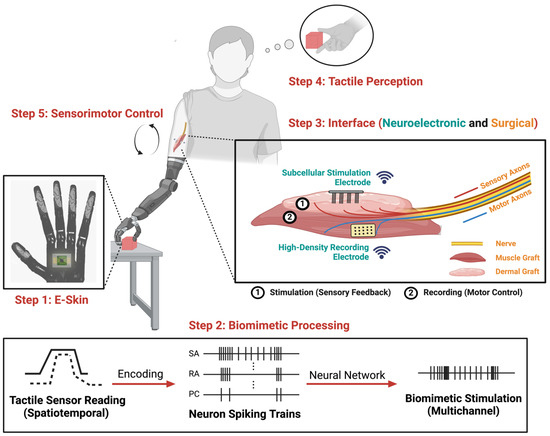
For decades, the field of neuroprosthetics tried to solve this by treating the brain as a one-way street. We built systems designed purely to listen. Engineers intercepted motor commands, decoded those electrical spikes, and used the data to drive robotic limbs. It was an incredible engineering achievement, allowing paralyzed patients to move physical objects just by thinking about it.
But any developer will tell you that running a system on open-loop execution is a recipe for trouble. Without real-time feedback, a user has to stare constantly at the robotic hand just to make sure they aren’t accidentally crushing a cup or dropping a fork. There’s no physical connection.
Now, that architecture is finally changing. We are learning how to write data back into the nervous system, and the implications go way beyond basic physical movement.
Building a Two-Way Street for Sensation
To understand why this is such a massive leap forward, you have to look at how we actually experience touch.
Back in 2016, a patient named Nathan Copeland, who had been paralyzed for over a decade, helped make a major breakthrough. Researchers connected a robotic hand directly to microelectrodes implanted in his somatosensory cortex. When they touched the mechanical fingers of the prosthetic, Nathan didn’t just watch it happen. He felt it.
It wasn’t a generic electrical buzz or a weird vibration, either. His brain processed those incoming signals as genuine, physical pressure felt in his own hand.
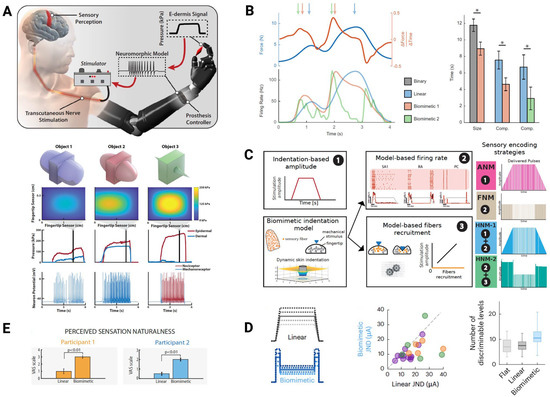
What this proved is that our nervous system is incredibly flexible, but only if we talk to it in a language it actually recognizes. Our skin doesn’t just send a flat voltage signal when we touch a surface. Instead, thousands of tiny receptors fire off highly complex, beautifully timed patterns of electrical spikes.
To replicate this, engineers are building what are called biomimetic feedback loops. Instead of hitting nerves with raw, continuous current, newer platforms like the Case Western “iSens” system translate physical pressure from prosthetic fingertips into natural, biological pulse patterns. By mimicking this natural timing, the brain is easily convinced. The user stops treating the prosthetic as an external tool and starts experiencing it as a real part of their body.
Moving Inward: The Shift to Cognitive Networks
Restoring physical touch is a life-changing milestone, but it’s really just the foundation. If we can build digital bridges over severed nerves to restore physical movement, what happens when the breakdown is deeper inside the central processing unit itself?
This is where the technology is making its next quiet leap: moving from physical repair to treating cognitive issues.
When you look at conditions like severe memory loss, traumatic brain injuries, or deep depression, you’re often looking at what are essentially routing and synchronization errors. The physical wiring in the brain might still be intact, but the communication lines between different regions have broken down or fallen out of sync.
Right now, a lot of research is focused directly on the hippocampus—the brain’s primary gateway for turning short-term experiences into long-term memories.
When this region is damaged, it struggles to organize and package information. To fix this, engineers are working on closed-loop deep brain stimulation systems that act like real-time neural coprocessors.
Instead of just blasting the brain with constant electricity, these devices listen first. They constantly monitor the electrical rhythms of the brain’s memory networks. When the onboard, low-power algorithms detect that the brain is actively trying to write a memory but lacks the signal strength to do it, the device injects a tiny, precisely timed micro-pulse. This small boost synchronizes the surrounding neural networks, helping them successfully record the data.
We are essentially building a digital bypass to help a struggling biological processor run its natural routines.
A Seamless Future
The ultimate goal of all this research isn’t to build bulkier, more complicated machinery. It’s to make the hardware completely disappear.
Whether it’s a prosthetic hand that feels identical to your own skin or a quiet implant that helps a damaged brain hold onto its memories, the dividing line between biology and machine is getting incredibly blurry. For engineers, it’s a brilliant reminder of what our work is really about: building the subtle, invisible bridges that help people live their lives.
If you enjoyed reading this
Check out our similar blog on iBreastExam: A Handheld Device That Can Detect Breast Lumps in Minutes