
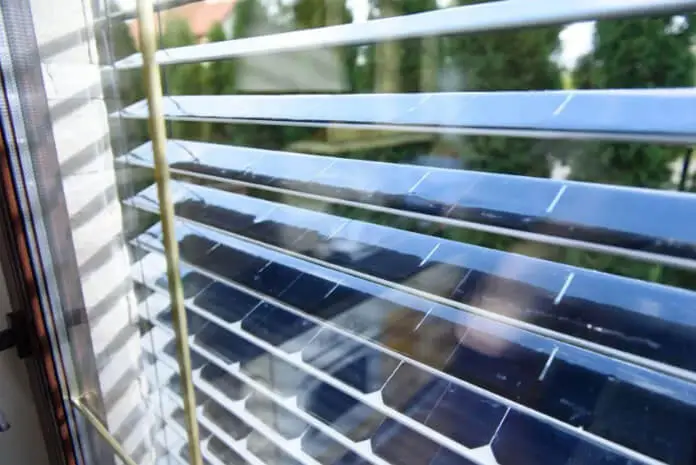
We’ve all seen traditional solar panels; those bulky, dark blue or black rectangles that people install on rooftops or spread across open fields. Although this technology operates effectively, it has one major limitation: it requires a lot of dedicated space to operate.
What if we didn’t need to clear fields or clutter rooftops? What if the windows of your home, your smartphone screen, and even the glass on every skyscraper could generate electricity?
Welcome to the world of Transparent Solar Panels.
What Exactly is a Transparent Solar Panel?
The secret lies in Selective Harvesting.
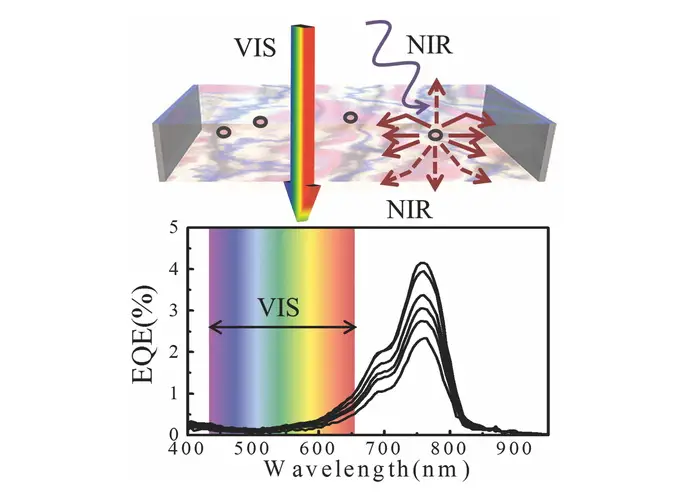
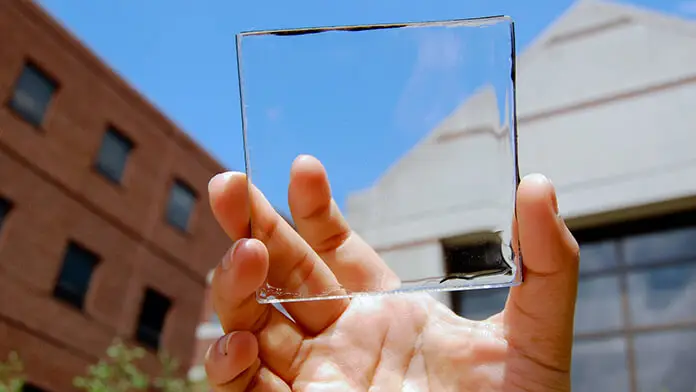
Researchers at Michigan State University, developed a “Transparent Luminescent Solar Concentrator” (TLSC) that can be used as a solar panel. Unlike traditional solar panels, these panels gather only the invisible parts of sunlight which include ultraviolet (UV) and infrared (IR) radiations.
Transparent solar panels are a new type of solar technology that allows visible light to penetrate the surface exactly like standard regular glass while simultaneously producing electrical power.
The light is then directed to the edges of the glass, where thin strips of conventional solar cells convert it into electricity.
Why This Changes Everything
The concept of “see-through” energy creates extensive transformational possibilities. This is not only about saving electricity costs, but also about rethinking the way we design the world around us.
1. Skyscrapers as Vertical Power Plants
Major cities lack sufficient rooftop areas yet possess extensive glass building materials. If every window on a building like the Burj Khalifa or the Empire State Building were replaced with transparent solar glass, the building could potentially power itself entirely on its own.
2. The End of “Low Battery” Anxiety
Imagine a smartphone or a laptop screen that charges itself. As long as you’re sitting near a window or out in the sun, your device will continuously charge its battery.
3. Greenhouse Revolution
Future agricultural operations could use transparent solar glass technology for greenhouses. It would be an ideal setup: the glass would transmit the visible light the plants need for photosynthesis, while capturing the infrared radiation to generate power for climate control and irrigation systems.
The Current Challenge:
This technology provides exciting possibilities, but it still has a trade-off.
1. Lower efficiency
Because these panels transmit light, they don’t capture as much energy as traditional solar panels.
- Traditional panels: ~18–24% efficiency
- Transparent panels: ~5–15% (sometimes even lower for fully clear versions)
That’s a significant gap.
2. Limited power output
Powering an entire house requires a much larger window area than a few high-efficiency roof panels.
3. Still evolving
Although this technology is improving, it is not as widely available or optimized as standard solar power solutions.
So… Are They Worth It?
Transparent solar technology isn’t meant to replace traditional solar power plants. The idea is to use “dead space”—like windows and screens—and turn them into productive energy sources. It’s about making sustainability invisible and easy
Think of it this way:
- Rooftop panels are your main power source..
- Transparent panels are the silent helpers that add extra energy from every surface.
The system improves energy efficiency by combining both.
Final Thought
Not all innovation needs to be flashy. Sometimes the powerful ideas are the ones that go unnoticed.Transparent solar panels are quiet, invisible and potentially everywhere. The next time you look out a window you might be looking at the future of energy.